

One Person Can Change the World
That Person Can Be You!
It is easy to believe that out of the seven billion people on earth today you cannot have a significant impact on the world. You are merely a single voice within a sea of humanity, and the voices that are heard and noticed are of the rich and noble, oftentimes brutal leaders of governments, business, entertainment, and sports.
 We think of people like Julius Caesar, Napoleon, Hitler, Elvis Presely, Winston Churchill, Isaac Newton, Albert Einstein, Stalin, John D. Rockefeller, Michael Jordan, and Jimmy Stewart as being great in the eyes of humanity and history. However, in most cases a thorough vetting of these people will reveal their notoriety was motivated by self-centered exploits, even following the leading of Satan the Devil. True service to one’s fellow man is seldom expressed by these people.
We need not question the influence of the greatest person that every lived — Jesus Christ, the Son of God — who more than any one person has influenced the world. He in turn has called out of this world individuals who have carried out His divine plan through the millennia, both before His presence on earth — for He existed during Old Testament times — and after his crucifixion. Among those highly influential people were the apostles, those witnesses of His crucifixion and resurrection whose works and words are recorded in New Testament writings.
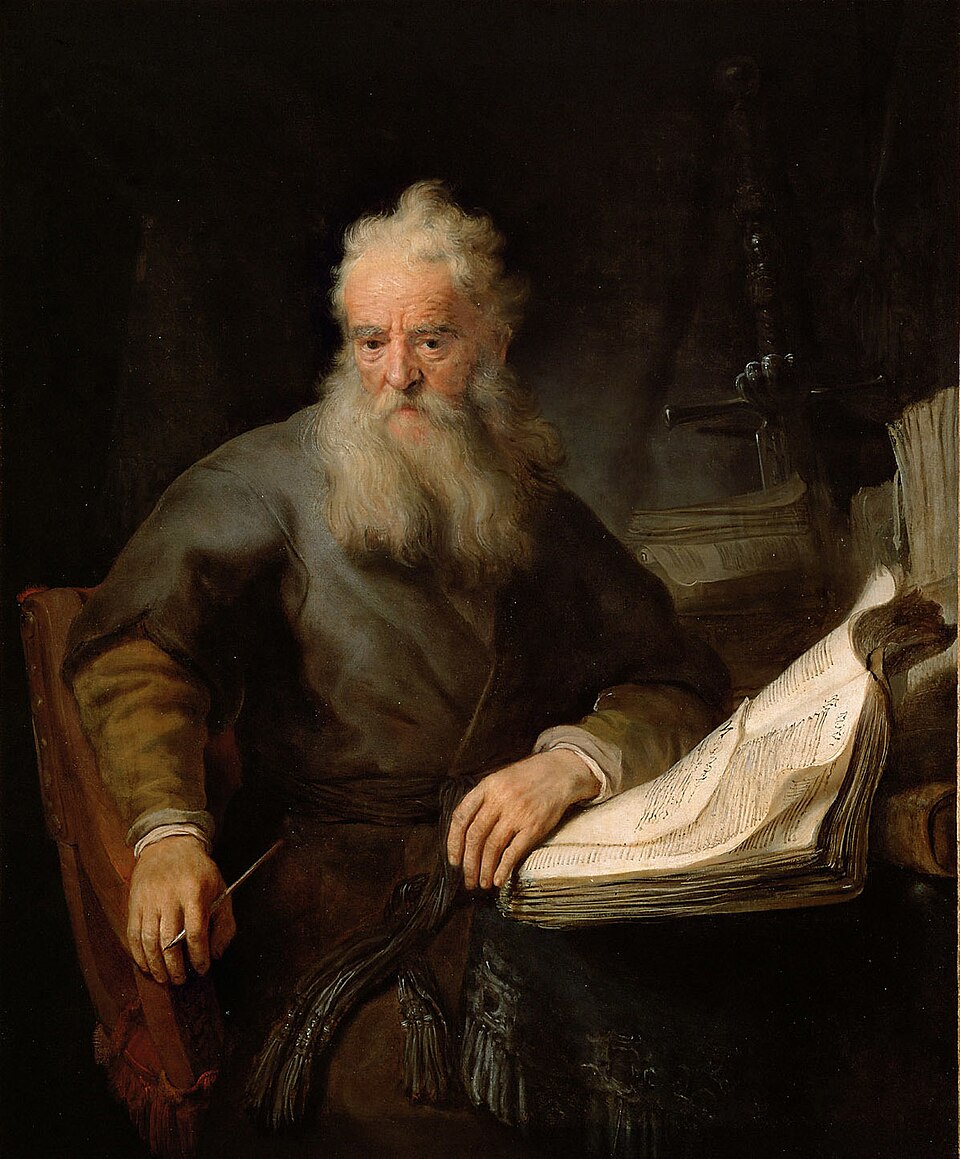
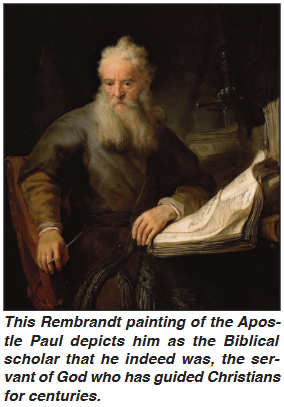
Among these New Testament writers was Paul of Tarsus. First named Saul, he was a rabid persecutor of the ecclesia, tracking down believers and imprisoning and killing them. Few religious leaders of his time were more zealous than he was in carrying out the divine laws of God, as he understood them, and tormenting those he considered to be apostates to the Hebrew faith … that is, until he was struck blind by the Master Himself on the road to Damascus.
“As he journeyed he came near Damascus and suddenly a light shone around him from heaven. Then he fell to the ground, and heard a voice saying to him, ‘Saul, Saul, why are you persecuting Me!’ And he said, ‘Who are You, Lord?’ Then the Lord said, ’I am Jesus, whom you are persecuting. It is hard for you to kick against the goads’” (Acts 9:3-5).
Saul was led to Damascus, where after three days Ananias laid hands on him and his sight returned, whereupon he was baptized and soon began preaching in the synagogues that Jesus is the Son of God (Acts 9:3-5). What a remarkable turnaround he made when placed under the direction of the Creator, and turned his intense energies and teachings towards the true God which he had not known before.
God Working Through One Man— to Change the Course of History
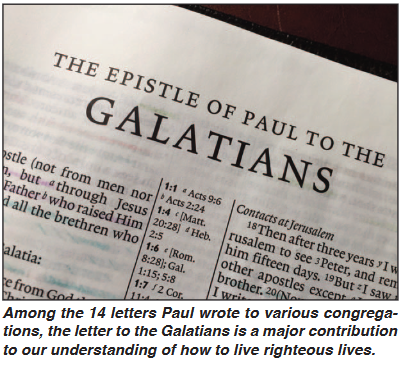
Saul, whose name was changed to Paul, through his years of ministering to those whom the Father called in his day, conveyed through his 14 letters that are preserved in Scripture some astounding concepts of Christian living that are found nowhere else in such vivid form. Let us examine some of those concepts which the Eternal wished to convey, not only to the ecclesia of his day, but to all of God’s people up to the present. These subjects were uniquely presented by Paul to the various congregations he helped establish across Greece and Asia Minor. They form the basis of our Scriptural understandings, and help us properly decipher the implications of the Torah, the prophetic books, and the other writings to guide us in using these words for our daily living.
1. Paul emphasized that God’s people are one body [soma, “the body as a whole, the instrument of life, or a reference to the whole ecclesia”]. While this truth is implied in Old Testament writings, it is not codified so clearly as Paul did in his letters. The nation of Israel was to be a single congregation, a “kingdom of priests and a holy nation” when they left Egypt and arrived at Mt. Sinai, a special treasure to God above all people (Exodus 19:5-6). The Eternal watched over Israel when the people entered Canaan and established their kingdom, and through the times of the judges and kings despite their disobedience and rejection of His ways. He did not utterly reject them, for He had promises made to Abraham, Isaac, and Jacob to be fulfilled. Our great God would never go back on His promises.
 “For as we have many members in one body, but all the members do not have the same function, so we, being many, are one body in Christ, and individually members of one another” (Romans 12:4-5).
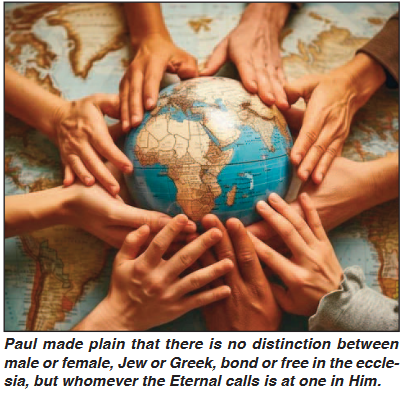
“For as the body is one and has many members, but all the members of that one body, being many, are one body, so also is Christ. For by one spirit we were all baptized into one body — whether Jews or Greeks, whether slaves or free — and have all been made to drink into one spirit” (I Corinthians 12:12-13; see also I Corinthians 10:17; 12:20, 25, 27).
“I now rejoice in my sufferings for you, and fill up in my flesh what is lacking in the afflictions of Christ, for the sake of His body, which is the church” (Colossians 1:24; see also Colossians 1:18; Ephesians 1:22-23; 4:4,12).
2. Paul identified the pervasive unity of Jesus Christ with the elect. This unity is expressed in different ways, and shows how we are in every way at one with him … and not just Him, but with the Father as well. Our baptism places us directly within the very being of Christ. Paul carries this idea of unity a step further than when Jesus stated in John 17:21, “… that they all may be one, as You, Father, are in Me, and I in You; that they also may be one in Us ….”
 “Or do you not know that as many of us as were baptized into Christ Jesus were baptized into His death? Therefore we were buried with Him through baptism into death, that just as Christ was raised from the dead by the glory of the Father, even so we also should walk in newness of life. For if we have been united together in the likeness of His death, certainly we also shall be in the likeness of His resurrection, knowing this that our old man was crucified with Him, that the body of sin may be done away with, that we should no longer be slaves of sin” (Romans 6:3-6).
“For as many as were baptized into Christ have put on Christ” (Galatians 3:27).
“I have been crucified with Christ; it is no longer I who live, but Christ lives in me; and the life which I now live in the flesh I live by faith in the Son of God, who loved me and gave Himself for me” (Galatians 2:20).
This unity of Christ with us is further emphasized by our being raised with Christ (Colossians 2:12), made alive together with Him (Colossians 2;13), seated with Him in heavenly places (Ephesians 1:3), and called a literal brother of Him (Romans 8:29). The unity of Jesus with us, His saints, upon repentance, baptism, and the laying on of hands — or in the Old Testament, or even in Christ’s own words — is not laid out any better than Paul has in his letters.
3. Membership in a religious organization or “church” is foreign to Scripture and Pauls’ teachings. Paul made it clear that true believers must come out of their past religious traditions — in his time that of the Jews — just as he had to come out of the traditions of his fathers. The true ecclesia [ekklesia, “a group of people called out for a special purpose”] is not a part of any humanly-sanctioned corporation, such as the Roman Catholic, Lutheran, Methodist, Baptist, Mennonite, or Presbyterian churches. These groups operate under government law, requiring them to have a top-down hierarchial organization rather than the brotherly, serving, loving, unity which the Eternal requires among His called-out ones.
“And He said to them, ‘The kings of the gentiles exercise leadership over them, and those who exercise authority over them are called “benefactors.” But not so among you; on the contrary, he who is greatest among you, let him be as the younger, and he who governs as he who serves’” (Luke 22:25-26).
Paul was brought up with a traditional Judaic education, taught at the feet of Gamaliel, a master of Hebrew knowledge and traditions (Acts 22:3). He was a strict Pharisee (Acts 26:5), and the Pharisees were in constant conflict with Jesus since the eternal precepts of God were often in conflict with the traditions of the Jews: the meaning of broad phylacteries, enlarging the borders of their garments, loving the best places at feasts and in synagogues, being called “Rabbi,” devouring widow’s houses, making long prayers, strictly tithing mint and cummin but neglecting justice, mercy, and faith, which appearing to be righteous to man but full of hypocrisy and lawlessness (Matthew 23). These traditions of the Jews were devised by the priests and leaders of Judaism over centuries, but usually conflicted with the teachings of Scripture, pitting Jesus against the Pharisees, Sadducees, scribes, and teachers constantly. Modern Judaism is very similar to ancient Phariseeism.
Note what Paul says about his break from Judaism:
“For you have heard of my former conduct in Judaism [ioudaios, ‘the Jewish faith’], how I persecuted the church of God beyond measure and tried to destroy it. And I advanced in Judaism beyond many of my contemporaries in my own nation, being more exceedingly zealous for the traditions [paradosis, ‘the Jewish traditionary law’] of my fathers” (Galatians 1:13-14).
 The word ioudaios denotes the religion of the Jews, and stands not for their religious beliefs but for their religious practices, not as instructed by God but as developed and extended from these by the traditions of the Pharisees and scribes.
We see that Paul was taught in the religion of the Jews which was not basically from Scripture, but from traditions of men, just as Jesus claimed in Matthew 15:9 and Mark 7:7. This was the equivalent of the Catholic and Protestant theology of today within the Christian world.
Paul left that Jewish religion and, as related in Galatians 1:15-16, was called by the Father’s grace, to have Christ revealed to him and in him so he Could preach Christ among the Gentiles. We can truthfully say that MEMBERSHIP IN A CHURCH ORGANIZATION IS FOREIGN TO SCRIPTURE, EVEN AS PAUL AND THE OTHER APOSTLES OPPOSED ORGANIZED RELIGION.
Instead, Paul made it abundantly clear that the brethren — those called out of this world, having received God’s spirit through baptism and the laying on of hands — were to fellowship as a body, not under the auspices of a corporate body or as an assembly akin to the pagan deities around them, but as the children of God. As Luke wrote:
“And they [the brethren recently baptized] continued steadfastly in the apostles’ doctrine and fellowship [koinonia, ‘a having in common, partnership, fellowship’], and the breaking of bread,and in prayers” (Acts 2:42).
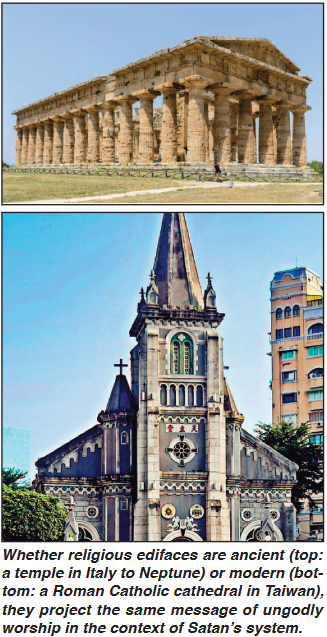
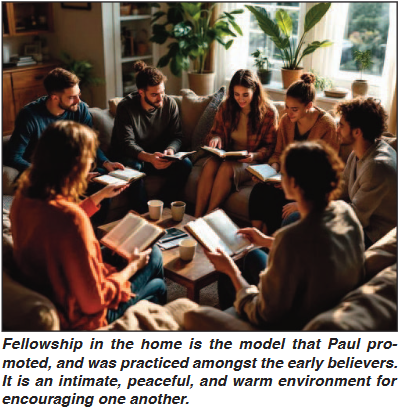
Paul wrote letters to the several congregations he helped establish, such as in Rome, Corinth, Galatia, Thessalonica, Ephesus, Philippi,and certainly elsewhere where brethren were called. These brethren usually met in homes, such as that of Aquilla and Priscilla (I Corinthians 16:19; Romans 16:3-5), Nymphas (Colossians 4:15), and Archippus (Philemon 2), not in buildings dedicated to pagan dieties as was common with worshippers of Dianna, Zeus, and Jupiter in the days of Paul. At times the brethren met in synagogues, but not commonly.
The brethren were encouraged to assemble often, especially on the Sabbath, and in fact Paul preached against those who forsook assembling together (Hebrews 10:25). The objective of this fellowship was to encourage one another to endure to the end in the midst of an evil and perverse civilization, to attain to the resurrection (I Thessalonians 4:15-18; 5:11). In fact, the major thrust of all of Paul’s letters is for the elect to meet together and uplift one another in the faith, utilizing the gifts granted to them at the receiving of the spirit of God. Such is the very essence of God’s governmental system among the brethren.
 4. Paul defined the nature and importance of Christian fellowship. As already discussed in point 3, the extreme necessity of encouragement [parakaleo, “to call to one’s side, call to one’s aid”] is the key to our associations so we might attain the resurrection. We do this by so many means:
- Be affectionate to one another in kindness, preferring one another (Romans 12:10).
- Have the same mind toward one another (Romans 12:16).
- Love one another (Romans 13:8; I Thessalonians 4:9).
- Do not judge one another (Romans 14:13).
- Edify one another j(Romans 14:19).
- Be likeminded toward one another according to Christ (Romans 15:5).
- Utilize your spiritual gifts to uplift one another (I Corinthians 12:27-31).
- Forbear one another with meekness and patience (Ephesians 4:2; Colossians 3:13).
- Forgive one another and be kind and tender hearted (Ephesians 4:32).
- Submit to one another in the fear of God (Ephesians 5:21).
- Don’t lie to each other (Colossians 3:9).
- Teach and admonish each other with singing (Colossians 3:16).
- Comfort one another with God’s words (I Thessalonians 4:18).
- Edify [oikodomeo, “build up”]one another (I Thessalonians 5:11).
- Prefer one another above others (I Timothy 5:21).
- Exhort [parakaleo, “call near”] one another daily (Hebrews 3:13).
- Provoke one another to good works (Hebrews 10:24).
Paul defined in detail the relationships we must have with one another and with those outside the body of Christ. He made clear that as we have opportunity we should “… do good to all, especially to those who are of the household of faith” (Galatians 6:10). We are shown to perform good works everywhere, “For we are His workmanship, created in Christ Jesus for good works, which God prepared beforehand that we should walk in them” (Ephesians 2:10).
Romans 12 so thoroughly outlines our responsibility as His People to:
“… present your bodies a living sacrifice, holy, acceptable to God, which is your reasonable service. And do not be conformed to this world, but be transformed by the renewing of your mind, that you may prove what is that good and acceptable and perfect will of God” (Romans 12:1-2).
We are told to utilize our spiritual gifts, love one another, abhor evil, cling to what is good, give preference to one another in honor, be fervent in spirit, rejoice in hope, be patient in tribulation, pray, help the needy, be hospitable, and do good to those who persecute you. We are to express the spiritual gifts fully amongst our brethren and the world: love, joy, peace, patience, kindness, goodness, faithfulness, gentleness, and self-control (Galatians 5:22-23).
Paul did more to reveal the means by which we must personally practice God’s way of life than any of the other apostles. He took the substance of the Torah, the prophecies, the teachings, and Jesus’ words and made them come alive for our personal living.
Besides establishing fellowships, he guided the nature of those fellowships … not in the manner we so often see today where a pastor or priest stands above the congregation as an authoritarian figure set over the people. Rather, he emphasized how all of the adult members were encouraged to prophesy [propleteno, “speak under inspiration”], in order and with the others judging [diakrino, “cross-examine”], to ascertain the truth on any subject (I Corinthians 14:1 29, 39). The practice of a single person monopolizing a fellowship originated within the pagan temples and Roman system, not in the system of the Creator. The brethren were encouraged to exercise their spiritual gifts to serve and uplift one another, normally in the context of a home fellowship.
“How is it then, brethren? Whenever you come together, each of you has a psalm, has a teaching, has a tongue, has a revelation, has an interpretation. Let all things be done for edification” (I Corinthians 14:26).
 Differences between Jewish and Gentile brethren were bridged to alleviate cultural and theological divisions — not an easy task (Galatians 3:26-29). Unity in Christ was taught to break down ethnic and social barriers that might tear apart the oneness of the elect.
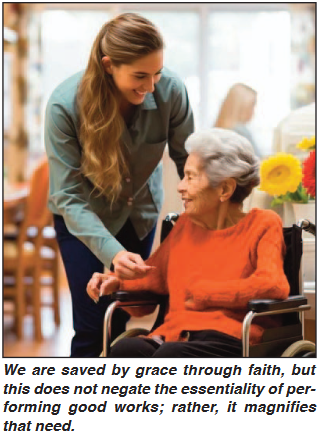
6. Paul amplified basic principles of Christian living. He emphasized that the saints are saved by grace, not by works, while making it clear that good works are essential for living the godly life.
“For by grace you are saved through faith, and that not of yourselves; it is the gift of God, not of works, lest any man should boast. For we are His workmanship, created in Christ Jesus for good works, which God prepared beforehand that we should walk in them” (Ephesians 2:8-10).
grace = charis, “favor on the part of the giver, thanks on the part of the receiver.”
faith = pistis, “persuasion, conviction.”
 Good works and lawful living are performed as a consequence of the spirit in you, not as a means to attain salvation. Paul made it clear that the elect must forsake immoral behavior, and quit the lying, cheating, stealing, drunkenness, and debauchery of their past and live quiet, peaceable lives, working good with their hands, supplying the needs of widows and orphans (Galatians 5:16-21; Ephesians 4:28; I Corinthians 4:12; I Thessalonians 4:11). They are to love their neighbors as themselves, parroting Christ’s own words (Romans 13:9, as quoted in Matthew 19:19 and 22:39).
Paul made plain the reality of the resurrection, and the need to carefully keep one’s body under control to attain that resurrection (I Corinthians 9:27). The way to fulfill the Father’s calling was made plain — repentance, faith, baptism, and the laying on of hands (Hebrews 6:1-2). Through his life experiences he also showed the need to persevere through incredible hardships, even to the point of death if necessary in order to attain the kingdom (II Corinthians 11:23-30). Personal illnesses or chronic sufferings — even being buffeted by a messenger of Satan — could be par for the course for a Christian, to keep one humble:
“And He [Christ] said to me, ‘May grace is sufficient for you, for My strength is made perfect in weakness.’ Therefore most gladly I will rather boast in my infirmities, that the power of Christ may rest upon me Therefore I take pleasure in infirmities, in reproaches, in needs, in persecutions, in distresses, for Christ’s sake. For when I am weak, then I am strong” (II Corinthians 12:9-10).
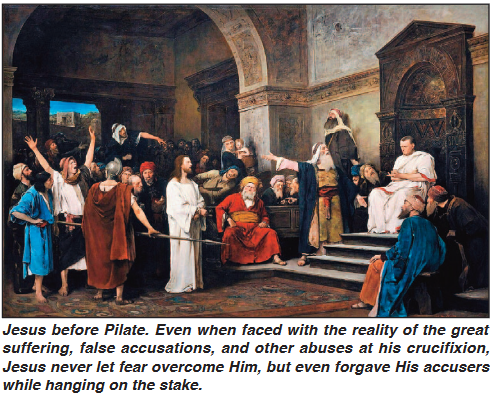
Paul was fearless when faced with death, a quality he gleaned from his extensive knowledge of Scripture. This example must captivate our own consciousness as well. Surely Paul would parrot Moses’ words as the Israelites stood by the Red Sea: “Do not be afraid. Stand still, and see the salvation of the Lord …” (Exodus 14: 13).
Paul Changed the World — So Can You!
A prominent Bible scholar, C. I. Scofield, had this to say about Paul regarding the mystery that Gentiles were to become a part of the modern ecclesia:
“The mystery ‘hid in God’ was the divine purpose to make a Jew and Gentile a wholly new thing — ‘the church, which is His [Christ’s] body,’ formed by the baptism with the holy spirit (I Corinthians 12:12-13) and in which the earthly distinction of Jew and Gentile disappears (Ephesians 2:14-15; Colossians 3:10-11). The revelation of this mystery … was committed to Paul. In his writings alone we find the doctrine, position, walk, and destiny of the Church” (C.I Scofield, The Scofield Bible, page 1,252, www.worldeventsandthebible.com).
One single totally committed person, under the inspiration of the holy spirit, expounded upon the truths of God to create a bridge of understanding between the Old Testament teachings, the teachings of Jesus Christ, and the ecclesia up to the present day. Paul accomplished his purpose as God’s apostle as long as he had life — even while in prison. Nothing could stop him from carrying out the incredibly vital responsibility he had to help create a foundation of understanding God’s eternal truths through brethren the Father called throughout the Roman Empire. As a result, we have today Paul’s timeless writings which further elaborate our understandings of Scripture, and guide our fellowship so we might encourage one another to endure to the end.
What about us? As individuals called into this glorious body of Christ, might we also be given a responsibility to change the world? Surely our responsibility is not exactly like Paul’s, but do we not have the same power within us to walk through the open doors God sets before us?
Perhaps we do not see ourselves as people as well educated or connected as Paul, and therefore less capable of witnessing the truth, but maybe, just maybe our influence in the world is more pervasive than we might imagine.
Paul stated in I Corinthians 4:9:
“For I think God has exhibited us, the apostles, last, as appointed to death, because we have become a spectacle [theatron, ‘a place for public show’] to the world, both to angels and to men” (Berean Standard Bible).
We may not be apostles, but we are a part of the ecclesia as was Paul, with gifts differing from his but God’s gifts nonetheless. We are called a royal priesthood, a holy nation, a peculiar [peripoiesis, “obtained, purchased’] people in I Peter 2:9 … hearkening back to Yahweh’s original intent for all of Israel to be “a kingdom of priests and a holy nation” (Exodus 19:6), a special treasure [cgullah, “jewel, peculiar treasure”] to Him above all people (Exodus 19:5).
As those special treasures of His, He can make of us whatever He wants. In our sphere of living on this earth we may not have Paul’s same mission, but each of our missions is unique, guided by God, and as we yield to Him we will accomplish just what He wants.
Perhaps we are already changing the world in a big way by being a light wherever we go, influencing people in ways we do not imagine. Maybe the seeds we have planted in the lives of hundreds or thousands of others will not germinate until the Tribulation, when great multitudes will be made white (Revelation 7:9-17). We simply do not know what amazing things might come from our living righteous lives day in and day out.
One thing is certain, that “… he who has begun a good work in you will complete it until the day of Jesus Christ” (Philippians 1:6). We as the elect who love God are assured that all things work together for good, and we will be conformed to the image of Jesus Christ (Romans 8:28-30). While our influence in the world today may be limited — it is, after all, Satan’s world — we are assured that as kings and priests in the coming age our efforts for good with mankind and the world will be immense beyond our imagination. As individuals we will then assuredly change the world toward its prophesied Edenic splendor in a huge way!